by shreya katti | Feb 3, 2026 | Shopify
If you’re starting an online store, learning how to add products in Shopify is the most important step. Your products are what customers see, search, and buy. A properly added product can increase conversions, improve search rankings, and make your store look professional.
In this guide, you’ll learn step-by-step how to add products on Shopify, including images, pricing, inventory, variants, shipping, and SEO.
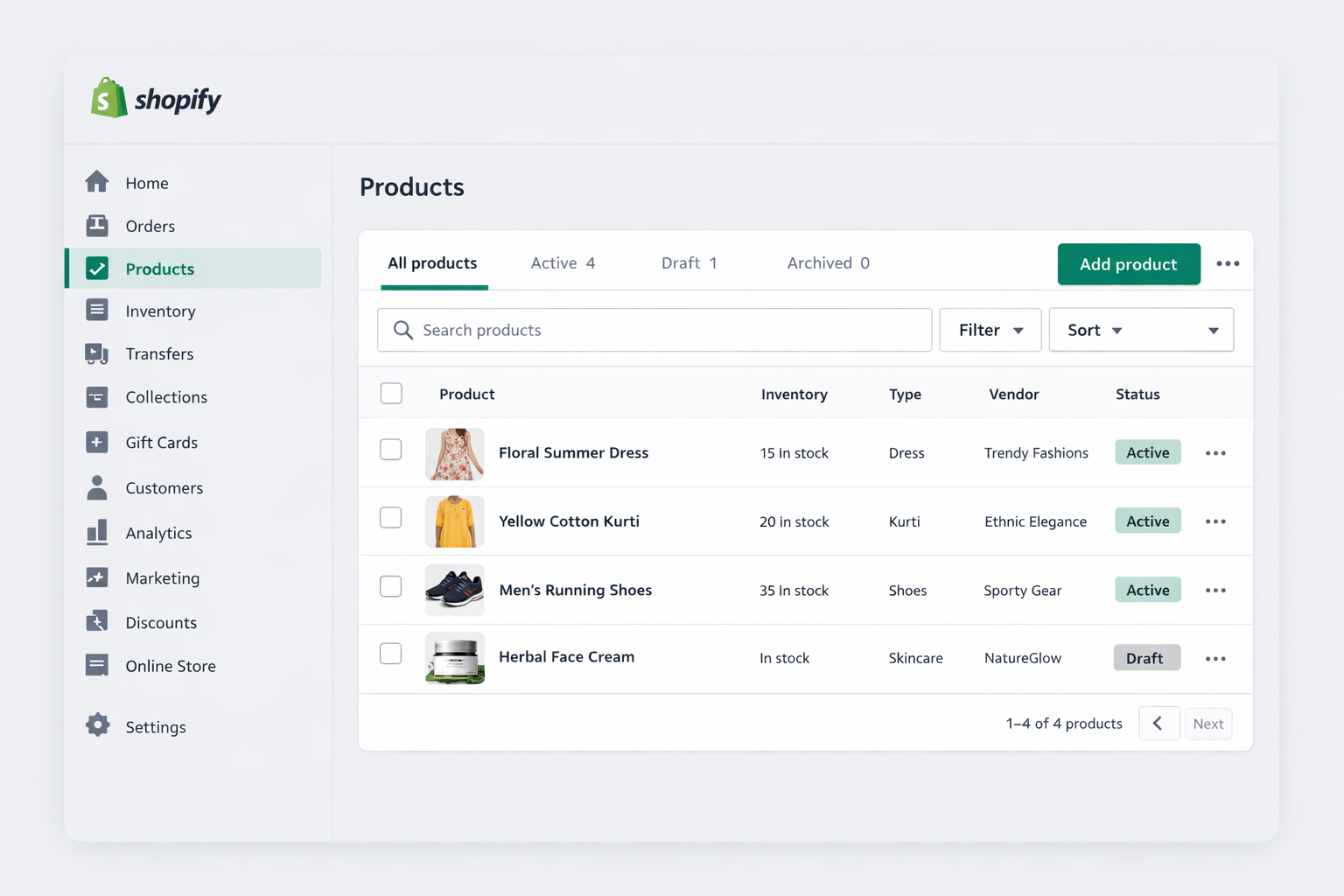
Step 1: Go to the Products Section
Log in to your Shopify dashboard
➡ Click Products from the left menu
➡ Click Add Product
Every physical, digital, or service product must be created here.
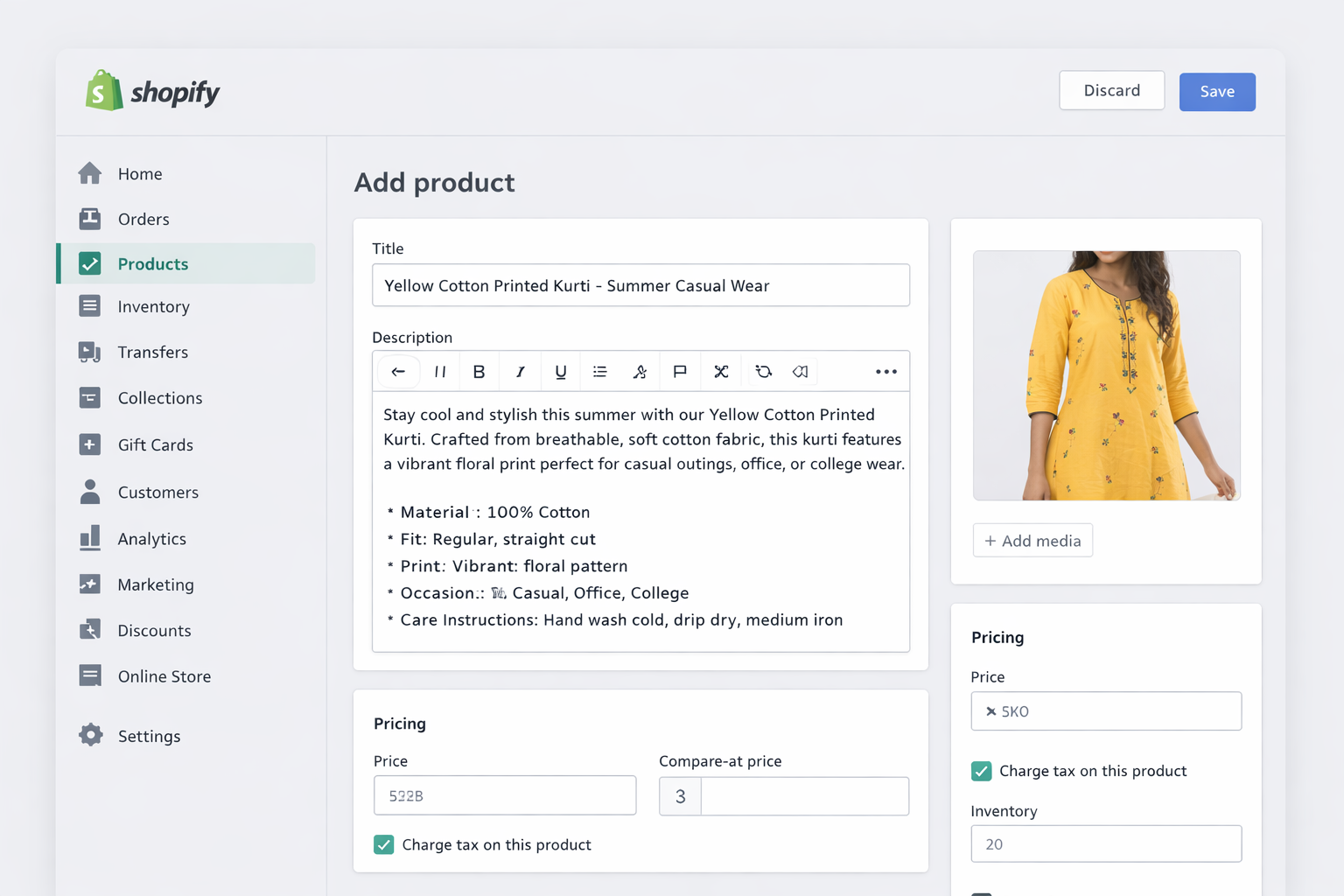
Step 2: Write a Strong Product Title
Your Shopify product title should clearly explain:
✔ What the product is
✔ Who it is for
✔ Key feature
Example: Women’s Cotton Printed Kurti – Summer Casual Wear
This improves:
-
Customer clarity
-
SEO rankings
-
Ad performance
Step 3: Add a High-Converting Product Description
Your Shopify product description should sell, not just describe.
Use this structure:
-
Problem it solves
-
Features
-
Benefits
-
Who should buy
-
Care instructions
Step 4: Upload Product Images
Images are the #1 factor in online sales.
Best practices:
✔ White/clean background
✔ Front view, back view, close-up
✔ Lifestyle/model photo
✔ Minimum 4 images
✔ Use 2000×2000px square images
Step 5: Set Product Pricing
Add:
Example: ₹799 (Compare at ₹1199)
This displays a discount badge automatically.
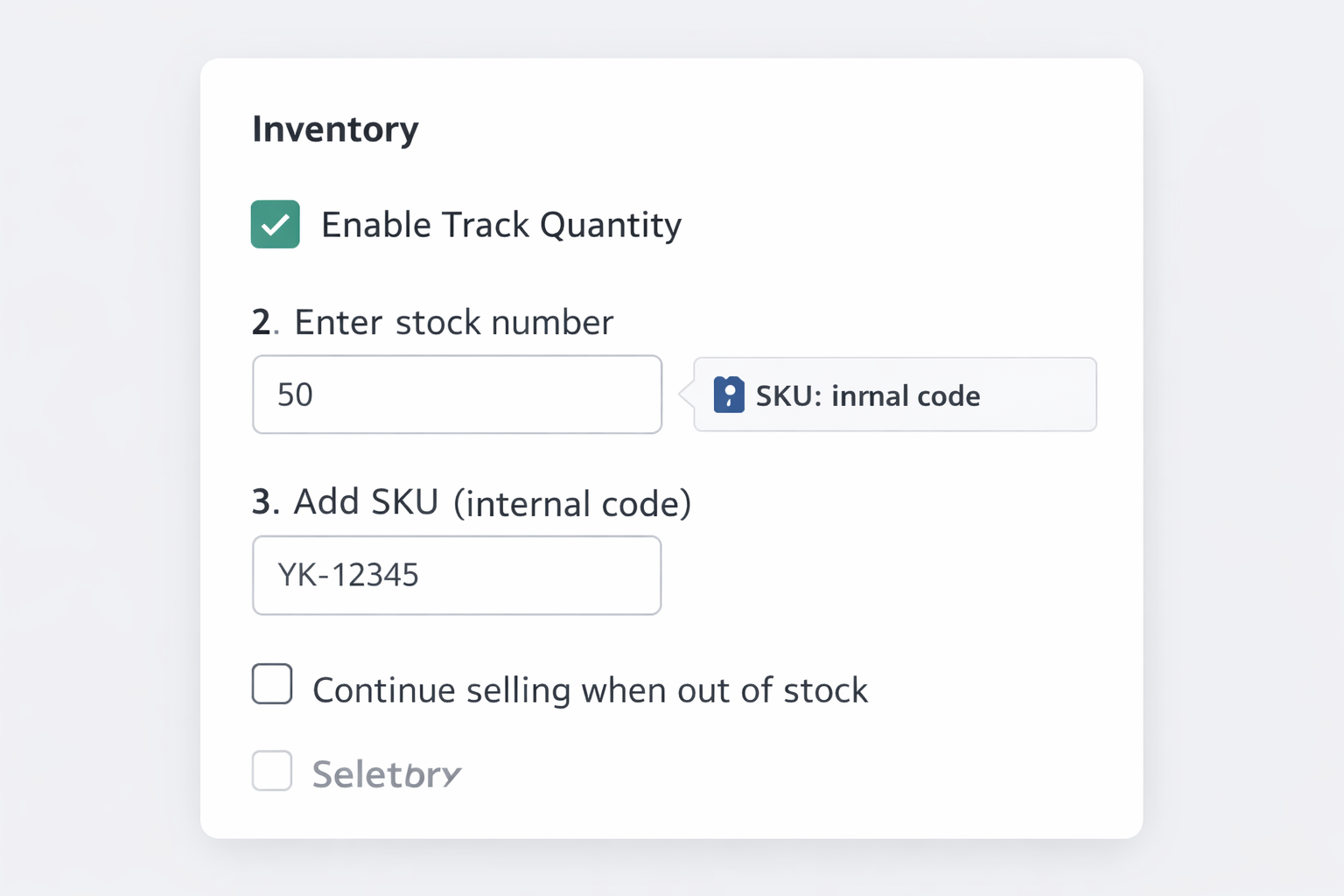
Step 6: Configure Inventory
✔ Enable Track Quantity
✔ Enter stock number
✔ Add SKU (internal code)
Step 7: Shipping Settings
If selling a physical product:
✔ Keep shipping checked
✔ Add weight
✔ Add country of origin
✔ Add HS code (for international shipping)
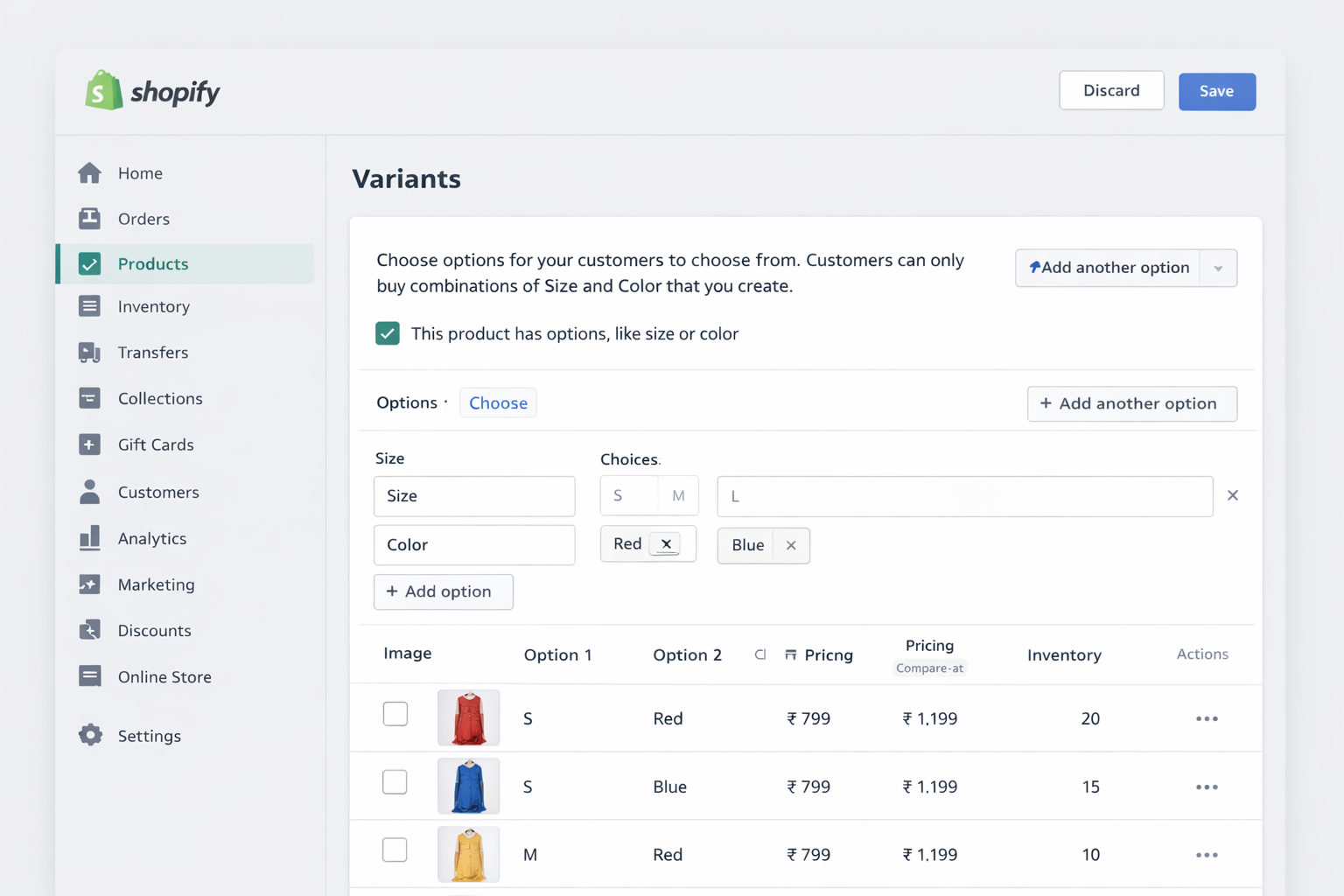
Step 8: Add Variants (Size, Color, etc.)
Variants allow multiple options.
Example:
-
Size: S, M, L
-
Color: Red, Blue
Each variant can have different price, stock, and image.
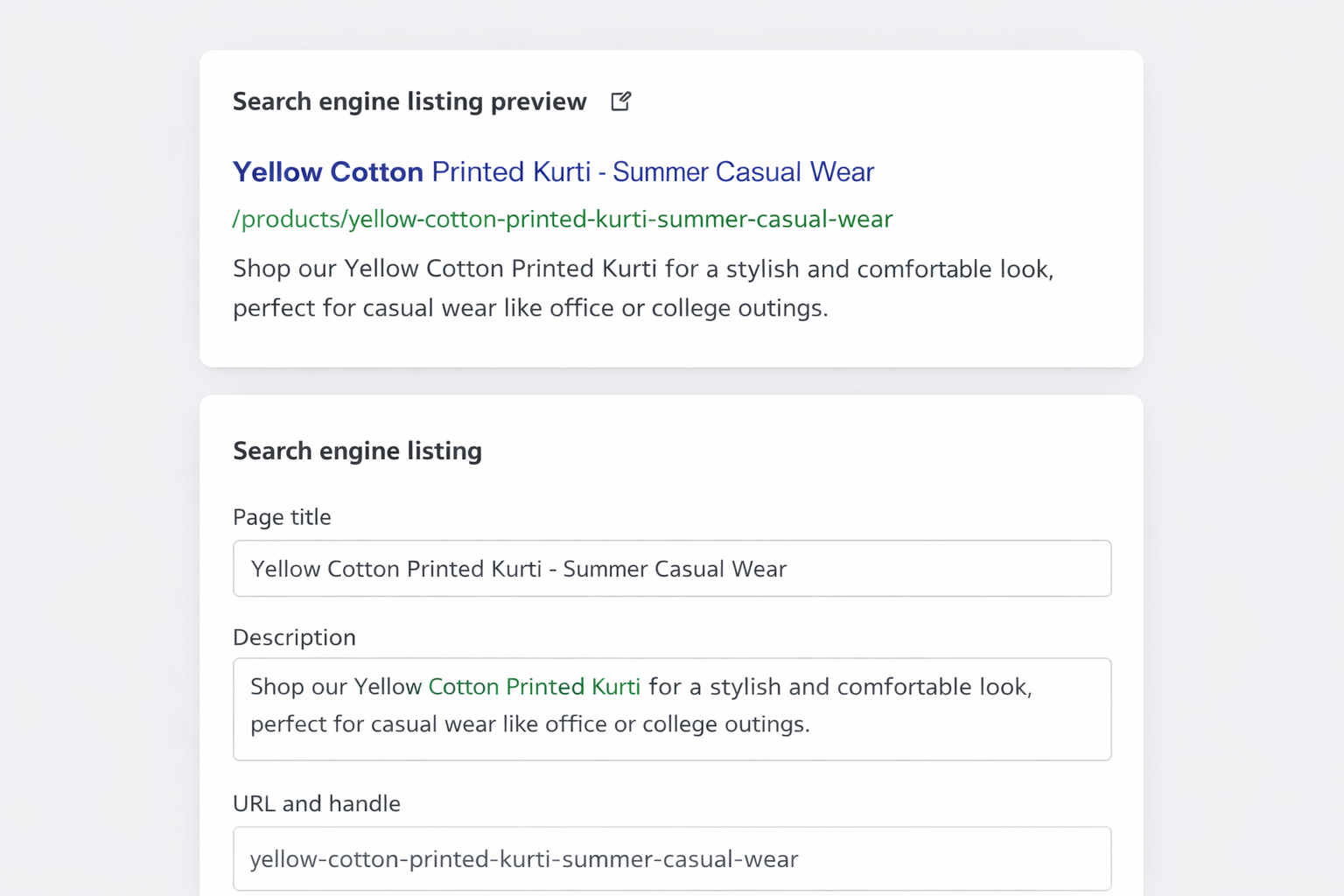
Step 9: Optimize Search Engine Listing (SEO)
Click Edit Website SEO
Add:
Page Title: Buy Cotton Printed Kurti Online in India
Meta Description: Shop high-quality cotton printed kurtis for daily wear, office, and college. Stylish, comfortable designs with fast delivery across India.
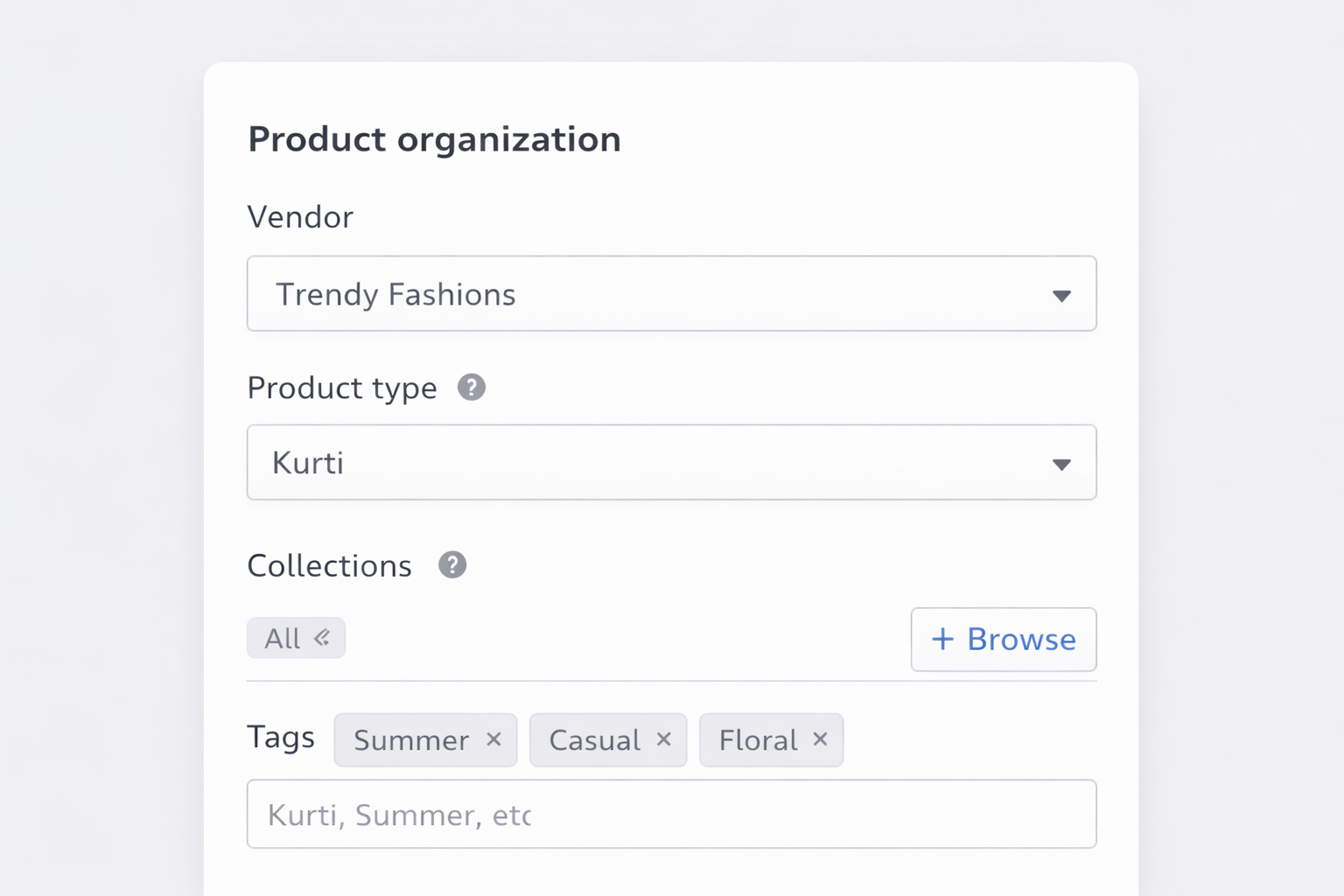
Step 10: Product Organization
Use:
This helps customers find products easily.
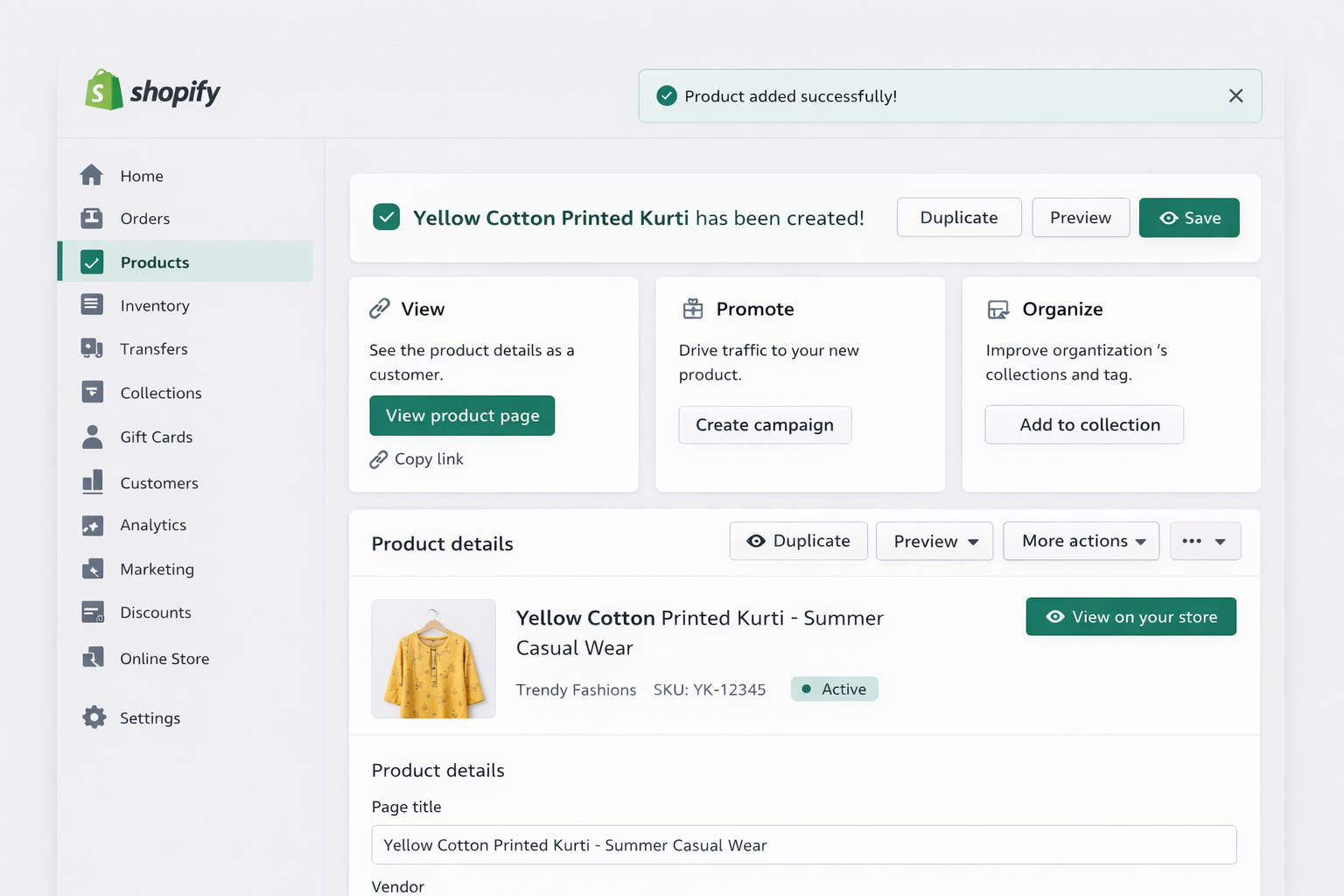
Step 11: Set Product Status
At the bottom:
-
Draft → Not visible
-
Active → Live on store
Common Mistakes to Avoid
❌ Only one image
❌ No description
❌ Wrong pricing
❌ Not tracking stock
❌ No variants
❌ No SEO title/meta description
Final Thoughts
Now you know exactly how to add products in Shopify the right way. A well-optimized product page improves trust, SEO, and conversions.
If you want your Shopify store professionally designed for better sales, you can contact me for Shopify website design and optimization services.
by shreya katti | Jun 9, 2025 | WordPress
🚀 Introduction
The digital landscape evolves rapidly, and 2025 is no different. With users expecting more personalized, immersive, and lightning-fast experiences, businesses must adapt their websites to stay competitive.
If your site looks and feels outdated, it may be time for a refresh.
In this post, we’re diving into the top web design trends in 2025 that are reshaping how websites are built and experienced. Whether you’re a business owner, a web designer, or someone planning to revamp their online presence, these trends will help you make informed decisions.
🔮 1. AI-Driven Personalization
Websites in 2025 are adapting in real-time based on user behavior—whether it’s personalized product recommendations or dynamic CTAs.
✨ Why it matters: Improves user engagement, builds loyalty, and increases conversions.
🛠 Tools to explore: ChatGPT, Dynamic Yield, Adobe Sensei
🧼 2. Minimalist & Clean Layouts
Less is more. Clean interfaces with white space and focused content help users take action faster.
Pro Tip: Stick to a consistent color palette, use bold fonts, and minimize distractions.
🌚 3. Dark Mode Designs
More websites are offering dark mode to reduce eye strain and look modern.
UX Tip: Provide a toggle so users can choose between light and dark mode.
✨ 4. Micro-Interactions & Animations
Subtle hover effects, click animations, and progress bars enhance user experience.
How to add it: Use Elementor’s motion effects or LottieFiles animations for lightweight design.
🖼 5. Full-Screen Hero Sections
Say goodbye to cluttered sliders. Hero sections now take over the entire screen with bold visuals and short CTAs.
When to use: On homepages or landing pages to create a strong first impression.
🎙 6. Voice Search Optimization
Voice search is here to stay. Focus on conversational, long-tail keywords.
Example: “Who is the best web designer in Bangalore?” instead of just “web designer.”
📱 7. Mobile-First Design
Google indexes mobile versions first. Your website must load fast and look perfect on every device.
Checklist: Test font sizes, clickable areas, load times, and overall layout on mobile.
🌀 8. Scroll-Triggered Animations
Trigger content or transitions as the user scrolls—like fade-ins or slide-ups.
Toolkits: Divi scroll effects, Elementor sticky sections, and AOS (Animate on Scroll)
🔠 9. Bold Typography & Custom Fonts
Typography now carries your brand voice. Use bold headings and unique font pairings.
Design Tip: Use Google Fonts or custom fonts that align with your brand tone.
♿ 10. Inclusive & Accessible Web Design
Accessibility is not optional anymore. Your website must support screen readers, keyboard navigation, and proper color contrast.
Tools to check accessibility: WAVE, Lighthouse, A11y Color Contrast Checker
🧭 Why These Trends Matter
A modern website:
- Builds credibility
- Improves SEO
- Increases engagement
- Boosts conversion rates
Your website is your digital storefront. Treat it like your best salesperson—active 24/7.
🛠 Apply These Trends with WordPress & Shopify
💡 As a WordPress expert (Divi & Elementor) and Shopify pro (Dawn Theme), I recommend:
- Using Elementor for scroll and motion effects
- Divi Builder for dynamic modules and responsive design
- Shopify’s Dawn Theme for minimalist, mobile-first stores
Need help implementing these trends? Let’s talk!
🎯 Final Thoughts
Web design in 2025 is all about user-first, performance-driven experiences. Whether you’re running a startup, agency, or personal brand, these trends will help you stay ahead.
💬 Let’s Connect!
Got questions or want a free consultation for your website?
👉 Contact me via Webspire.co.in
📢 Comment below, share this post, and stay tuned for the YouTube video!
by shreya katti | Jun 7, 2025 | WordPress
Build a Stunning Website That Converts — The Smart Way!
In 2025, building a business website on WordPress is easier than ever — but choosing the right WordPress theme can still make or break your online presence.
With thousands of themes out there, how do you know which one will help your business stand out, load fast, and convert visitors into customers?
This blog breaks down everything you need to know to choose the perfect theme for your business in 2025 — whether you’re using Elementor, Divi, or just starting out.
🚀 Why Your WordPress Theme Matters in 2025
Your website theme isn’t just about how things look — it impacts:
- ✅ Speed & Performance
- ✅ User Experience (UX)
- ✅ Search Engine Optimization (SEO)
- ✅ Mobile Responsiveness
- ✅ Conversion Rates
That’s why choosing the wrong theme can cost you time, money, and customers.
🔍 Key Factors to Consider When Choosing a Theme
Here are the top things to check before installing a WordPress theme in 2025:
1️⃣ Speed & Lightweight Code
📌 A fast website = better rankings + happier visitors.
Choose themes optimized for speed, like:
- Astra
- GeneratePress
- Hello Elementor (if you’re using Elementor)
Avoid bloated themes that load too many scripts and features you don’t need.
2️⃣ Mobile-First & Responsive Design
Over 70% of visitors now come from mobile devices.
Test the theme on phones and tablets. It should look amazing on all screen sizes!
🛠 Pro tip: Use Google’s Mobile-Friendly Test tool before finalizing.
3️⃣ Compatibility With Page Builders (Elementor / Divi)
If you love drag-and-drop design, make sure the theme is fully compatible with:
- Elementor (check for “Elementor Compatible” badge)
- Divi Builder
- Gutenberg (WordPress’s default block editor)
We recommend:
✅ Astra + Elementor for fast, flexible design
✅ Divi Theme for built-in drag-and-drop and stylish templates
4️⃣ SEO Optimization
A poorly coded theme can ruin your SEO.
Look for themes with:
- Clean HTML5/CSS3 code
- Schema markup
- Compatibility with SEO plugins like AIOSEO or Yoast
Bonus: Use themes that offer breadcrumb support and fast load times.
5️⃣ Customization Options
Your brand is unique — your website should be too.
Look for themes that allow you to easily customize:
- Colors
- Fonts
- Layouts
- Header/Footer
- Blog styles
Themes like Astra and Kadence offer advanced customization without code.
6️⃣ Regular Updates & Support
Only pick themes that are:
- Frequently updated
- Compatible with the latest WordPress version
- Backed by solid documentation and user support
Stay away from abandoned or outdated themes.
7️⃣ Niche-Specific Demos
Some themes come with ready-made templates for:
- Real Estate
- Coaches
- Agencies
- eCommerce stores
- Bloggers
- Doctors, Lawyers, etc.
🧠 Pick a theme that’s close to your business type. It’ll save time!
🌟 Best WordPress Themes for Businesses in 2025
Here are a few top-rated themes that check all the boxes:
| Theme |
Best For |
Builder Compatibility |
| Astra |
All businesses, agencies |
Elementor, Gutenberg |
| Kadence |
Bloggers, service-based sites |
Gutenberg, Elementor |
| Blocksy |
Creative and modern layouts |
Gutenberg |
| Divi |
Agencies, portfolios |
Built-in Divi Builder |
| Hello |
Custom builds with Elementor |
Elementor only |
🛑 What to Avoid in 2025
- ❌ Themes with no updates in the last 6 months
- ❌ No mobile responsiveness
- ❌ Poor reviews or unverified developers
- ❌ Features you won’t use (slows down site)
- ❌ Themes that don’t support your builder
✅ Final Tips Before You Decide
- Install the Theme Check plugin to verify quality
- Read reviews and look at the changelog
- Always test the demo on mobile + desktop
- Prefer themes with a free version you can try first
🔧 Need Help Picking or Customizing a Theme?
At Webspire, we specialize in:
- WordPress setup using Elementor & Divi
- Theme customization for businesses
- SEO optimization + speed improvements
📞 Contact us today for a free consultation and let us build the perfect website for your business.
by shreya katti | Jun 4, 2025 | WordPress
If you want to drive free, high-quality traffic to your website in 2025, mastering on-page SEO is non-negotiable. Whether you’re a business owner, blogger, or web designer, this guide will walk you through the most effective, up-to-date on-page SEO practices — helping your website rank on the first page of Google.
📌 BONUS: These practices apply perfectly to WordPress websites (Elementor, Divi) and Shopify stores alike!
🔍 What is On-Page SEO?
On-page SEO refers to the optimization you do on your website to make it more search engine-friendly. It includes:
- Optimizing content
- Using keywords effectively
- Structuring your site with proper headings
- Improving internal linking
- Enhancing user experience
📈 Why On-Page SEO Still Matters in 2025
Even with all the new AI tools and algorithm updates, on-page SEO remains the foundation of organic visibility. Google now prioritizes:
- User intent
- Content depth
- Mobile experience
- Page speed
- Accessibility
If your site nails these elements, it’s far more likely to rank well.
🔑 Top On-Page SEO Best Practices in 2025
Let’s get into the most effective practices you should implement right now.
- ✅ Focus on Search Intent First
Keywords alone don’t cut it anymore. You need to understand what the user is actually looking for.
💡 Example:
If someone searches “best SEO tools,” they probably want a list, not a long paragraph.
👉 Always match your page content to the intent behind the keyword.
- 🔍 Use High-Impact Keywords (Smartly)
Use tools like Ubersuggest, Ahrefs, or Google Keyword Planner to find:
- Primary keyword
- Secondary/related keywords
- Long-tail keywords
📌 Pro tip: Place your primary keyword in the:
- Title Tag
- Meta Description
- URL
- H1 heading
- First 100 words of content
Example:
Instead of: yourdomain.com/page1
Use: yourdomain.com/on-page-seo-tips-2025
- 📖 Use Proper Heading Structure (H1–H6)
Google reads your headings to understand the content structure.
- Use only one H1 per page (your main title)
- Use H2s for sections and H3s for subpoints
This improves readability for both users and search engines.
- 📸 Optimize All Images
Large or untagged images slow your site and hurt SEO.
✅ Do this:
- Use WebP or compressed JPEGs
- Add alt text with keywords
- Rename files before uploading (e.g., on-page-seo-checklist.jpg)
- 🌐 Internal Linking Strategy
Link to other important pages and blogs on your site.
Benefits:
- Distributes SEO authority
- Keeps users on-site longer
- Helps Google crawl your site better
📌 Tip: Use descriptive anchor text like “SEO checklist” instead of “click here.”
- 📲 Make Your Website Mobile-Friendly
More than 70% of searches happen on mobile. Use responsive themes like:
- Astra + Elementor (for WordPress)
- Dawn theme (for Shopify)
Check mobile responsiveness using Google’s Mobile-Friendly Test.
- 🚀 Improve Page Speed
Use tools like:
- Google PageSpeed Insights
- GTmetrix
- WP Rocket / LiteSpeed Cache for WordPress
Reduce:
- Render-blocking scripts
- Unused CSS
- Unoptimized images
- ✍️ Create Engaging, Long-Form Content
Content that solves problems in detail ranks higher.
✅ Ideal blog post length in 2025: 1000–1500 words
✅ Break content with bullets, visuals, headings, and infographics
✅ Include a FAQ section for featured snippets
- 📊 Add Schema Markup
Use tools like Schema Pro or Rank Math SEO plugin to add:
- FAQs
- Star ratings
- Product details
- Event info
This helps boost rich results on Google.
- 🧩 Use Clean, SEO-Friendly URLs
Good:
/seo-services-bangalore
Bad:
/page?id=123
Keep it short, readable, and keyword-rich.
🧰 Bonus Tools for On-Page SEO in 2025
- Rank Math / Yoast SEO (WordPress plugins)
- AIOSEO – Best for beginners
- Google Search Console
- Surfer SEO – For content scoring
- Screaming Frog SEO Spider – For audits
📞 Final Thoughts: Let’s Rank You Higher!
On-page SEO isn’t just about keywords anymore — it’s about the entire experience you offer. If you implement these strategies consistently, your site will be ready to rank in 2025 and beyond.
💬 Need help optimizing your WordPress or Shopify site?
Reach out at Webspire.co.in – we offer complete on-page SEO services, website audits, and performance tuning.
📣 Don’t forget:
- Comment below your questions
- Share this blog with others
- Subscribe to our newsletter for weekly SEO tips
Would you like me to now proceed with the YouTube video script for this blog as a faceless video?
by shreya katti | May 29, 2025 | WordPress
How to Improve Your Website Speed for Better SEO and User Experience in 2025
✅ Introduction
Website speed is more than just a technical metric—it’s one of the most important factors that affects SEO, user experience, and conversion rates. In 2025, with Google’s ever-evolving algorithms and user expectations, a slow-loading website can push your visitors (and your rankings) away.
If you’re using WordPress (Elementor/Divi) or Shopify (Dawn theme), don’t worry—we’ll show you how to turbocharge your website’s performance with simple, actionable steps.
🚀 Why Website Speed Matters in 2025
- Google uses site speed as a ranking factor.
- 53% of mobile visitors leave if a page takes more than 3 seconds to load.
- Faster websites lead to better engagement, lower bounce rates, and higher conversions.
🔍 Step-by-Step Guide to Improve Website Speed
- Measure Your Current Speed
Start by running a speed test using tools like:
✅ These tools give you insights into load times, problem areas, and optimization suggestions.
- Use a Lightweight Theme
If you’re on:
- WordPress: Use fast themes like Astra, GeneratePress, or Hello Elementor.
- Shopify: Stick to the Dawn theme or other optimized Shopify 2.0 themes.
🧠 Avoid bulky themes that come with preloaded features you don’t use.
-
Optimize Images
- Compress images using tools like TinyPNG or ShortPixel.
- Use WebP format for smaller file sizes without loss of quality.
- Lazy load images so they load as users scroll.
📸 Example: A 2MB image can be reduced to 200KB using WebP and compression.
-
Use Caching
Caching stores a copy of your website and delivers it faster to returning users.
✅ Recommended Plugins:
- WordPress: WP Rocket, W3 Total Cache, LiteSpeed Cache
- Shopify: Caching is handled by Shopify’s CDN, but keep code clean and apps minimal.
-
Minify CSS, JavaScript & HTML
Minification removes unnecessary characters from your code to reduce file size.
🚀 Use:
- Autoptimize plugin (WordPress)
- Theme settings or external apps for Shopify
-
Enable a Content Delivery Network (CDN)
A CDN distributes your content across global servers, reducing load times for users worldwide.
Top CDNs:
- Cloudflare (Free & Paid)
- BunnyCDN
- StackPath
-
Reduce HTTP Requests
Every image, font, or script is a separate request. Too many can slow down your site.
🛠️ Tips:
- Combine files where possible
- Use fewer plugins or apps
- Limit external fonts and scripts
-
Limit Third-Party Scripts
Things like chat widgets, social media feeds, and analytics can add bloat.
✅ Only keep what’s necessary. Delay or load scripts asynchronously when possible.
-
Optimize for Mobile
In 2025, mobile-first indexing is the default.
📱 Use responsive design, avoid large popups, and make sure your site is touch-friendly.
-
Use Lazy Loading for Videos and iFrames
Videos and embeds can slow down page load drastically.
Use lazy load plugins or code snippets to delay loading until the element comes into view.
⚡ Bonus: Test After Each Change
Speed optimization is a continuous process. After each tweak, test your site again with PageSpeed or GTmetrix to ensure improvements.
🧩 Final Thoughts
Your website speed plays a crucial role in how users and search engines interact with your site. Whether you’re using WordPress with Elementor or Divi, or Shopify with the Dawn theme, these best practices will help you create a fast, smooth, and conversion-friendly website in 2025.
🔗 Need help optimizing your website speed?
At Webspire.co.in, we specialize in speed optimization, SEO, and user-first website design. Reach out for a free performance audit today!